Ever found yourself staring at that sleek new ice maker, wondering if it’s secretly plotting to send your electricity bill through the roof? You’re not alone. Understanding the Ice Maker Electricity Usage Per Hour is a common concern for anyone who loves the convenience of an endless supply of fresh ice. Let’s be real, nobody wants a luxury that ends up costing a fortune to run. So, let’s pull back the curtain and break down exactly what you can expect, how to calculate the cost, and how to keep it from becoming an energy hog.
Why You Need an Ice Maker in Your Life
Before we dive into the watts and kilowatts, let’s quickly touch on why these gadgets have become so popular. I’ve seen them save countless summer barbecues, elevate home cocktail parties, and provide that satisfyingly chewable nugget ice for soda lovers.
- Convenience: No more frantic, last-minute trips to the store for bags of ice.
- Quality: You control the water source, meaning purer, better-tasting ice without any weird freezer flavors.
- Speed: Most countertop models can churn out a batch of ice in under 10 minutes.
- Versatility: Perfect for homes, RVs, boats, offices, and dorm rooms.
It’s a simple appliance that solves a common problem, but its energy footprint is a valid question.
Cracking the Code: How Much Power Does an Ice Maker Use?
Let’s get straight to the point. A typical portable or countertop ice maker uses between 150 to 300 watts of power while it’s actively making ice.
But here’s the crucial part: it doesn’t run constantly. An ice maker cycles on and off. It runs the compressor and refrigeration unit to freeze the water, drops the ice, and then waits until the ice level is low or the existing ice begins to melt before starting a new cycle. This on-and-off process is key to understanding its actual energy consumption over time, not just its peak wattage.
Think of it like your refrigerator. The compressor isn’t running 24/7; it kicks in to maintain the temperature. Your ice maker does the same thing to maintain the ice supply.
Key Factors That Influence Ice Maker Electricity Usage Per Hour
Not all ice makers are created equal when it comes to power consumption. The ice maker electricity usage per hour can vary significantly based on a few critical factors. If you’re shopping for a new machine or trying to optimize your current one, pay close attention to these points.
The Type of Ice Maker Matters
- Portable/Countertop Ice Makers: These are the most common for home use. They’re generally efficient for their size, falling into that 150-300 watt range. They work hard and fast for short bursts.
- Undercounter/Built-In Ice Makers: These are larger, more powerful units designed to produce and store a lot more ice (often 25 lbs or more). They naturally have a higher power draw, sometimes reaching 400-500 watts or more, but they are also better insulated, which can improve their overall efficiency once a full bin of ice is made.
- Commercial Ice Machines: These are the big leagues. Found in restaurants and hotels, they can use thousands of watts and are a completely different category. We’ll stick to the residential models here.
Ambient and Water Temperature
This is a huge one that most people overlook. Your ice maker is essentially a heat pump—it moves heat out of the water to freeze it.
“I always tell my clients the fastest way to make their ice maker work harder is to put it in a hot, stuffy room,” says John Carter, a home appliance specialist with over 15 years of experience. “Give it some breathing room in a cool, well-ventilated spot, and you’ll see a noticeable difference in both speed and energy efficiency.”
- Ambient Temperature: If the room is hot, the machine has to work much harder to dissipate heat and cool its refrigeration system. An ice maker in a 90°F (32°C) garage will use significantly more electricity than one in a 70°F (21°C) kitchen.
- Water Temperature: Starting with cold water from the fridge versus room-temperature water from the tap gives your ice maker a head start. It takes less energy to freeze water that’s already cold.
Overall Maintenance and Cleanliness
A dirty machine is an inefficient machine. Over time, dust and grime can build up on the condenser coils, trapping heat. This forces the compressor to run longer and harder to do its job, directly increasing your ice maker electricity usage per hour. Similarly, mineral scale from hard water can build up on the internal components, reducing freezing efficiency. Regular cleaning isn’t just for hygiene; it’s for performance.
|
Our Picks for the Best Ice Maker in 2026
As an Amazon Associate, we earn from qualifying purchases.
|
||
| Num | Product | Action |
|---|---|---|
| 1 | Silonn Countertop Ice Maker, 9 Ice Cubes in 6 Mins, 26 Lbs in 24 Hrs, Compact Ice Machine with Ice Basket & Scoop, 2 Ice Sizes, Self-Cleaning Ice Maker for Home/Party/Office/Bar/Dorm, Black |

|
| 2 | FRIGIDAIRE EFIC189-Silver Compact Ice Maker, 26 lb per Day, Silver |
|
| 3 | Silonn Ice Makers Countertop, 9 Cubes Ready in 6 Mins, 26lbs in 24Hrs, Self-Cleaning Ice Machine with Ice Scoop and Basket, 2 Sizes of Bullet Ice for Home Kitchen Office Bar Party, Sliver |
|
| 4 | Ice Maker Countertop, 9 Cubes Ready in 6 Mins, 26 lbs per Day, Ice Machine with 2 Ice Sizes and Self-Cleaning, Portable Ice Maker with Handle for Home, Kitchen, Camping, RV, Office, Black |
|
| 5 | Nugget Ice Maker Countertop, Silonn Chewable Pellet Ice Machine with Self-Cleanin Function, 33lbs/24H Portable Ice Makers for Home Kitchen Officce, Black |
|
| 6 | EUHOMY Nugget Ice Maker Countertop with Handle, Ready in 6 Mins, 34lbs Per Day, Removable Top Cover, Auto-Cleaning, Portable Sonic Ice Maker with Basket and Scoop, for Home/Party/RV/Camping (Black) |
|
| 7 | FRIGIDAIRE EFIC128AMZBLK Compact Countertop Ice Maker, 26 lb per Day, Black |
|
| 8 | EUHOMY Nugget Ice Makers Countertop, Pebble Ice Maker Machine with 35lbs/24H Soft Ice, Self-Cleaning Sonic Ice Maker with Ice Scoop&Basket, Pellet Ice Maker for Home/Kitchen/Office(Stainless Steels) |
|
| 9 | Frigidaire 26 Lbs per Day Portable Compact Maker, Ice Making Machine, Black Stainless, Medium |
|
| 10 | Silonn Nugget Ice Maker Countertop, Pebble Ice Maker with Soft Chewable Ice, One-Click Operation Ice Machine with Self-Cleaning, 33lbs/24H for Home,Kitchen,Office |
|
Let’s Do the Math: How to Calculate Your Monthly Cost
Ready to figure out what your ice maker is really costing you? It’s easier than you think. You’ll need two pieces of information:
- Your ice maker’s wattage: You can usually find this on a sticker on the back or bottom of the unit, or in the user manual.
- Your electricity rate: Look at your latest utility bill. It’s listed in cents or dollars per kilowatt-hour (kWh). The U.S. average is around 16 cents/kWh, but it varies wildly by location.
Here’s the step-by-step formula:
- Find the Wattage: Let’s say your machine is rated at 200 watts.
- Estimate Daily Run Time: This is the tricky part. It won’t run 24 hours. A good estimate for an average household is that the machine will be actively working for about 8-12 hours out of 24 to produce and maintain a supply of ice. Let’s use 10 hours for our example.
- Calculate Daily Watt-Hours:
Wattage x Hours of Use = Watt-Hours
200 Watts x 10 hours = 2000 Watt-hours - Convert to Kilowatt-Hours (kWh): Since utility companies bill in kWh, divide by 1000.
2000 Watt-hours / 1000 = 2 kWh per day - Calculate the Daily and Monthly Cost:
- Daily Cost:
Daily kWh x Your Electricity Rate
2 kWh x $0.16/kWh = $0.32 per day - Monthly Cost:
Daily Cost x 30 days
$0.32 x 30 = $9.60 per month
- Daily Cost:
So, in this example, a typical countertop ice maker might add less than $10 to your monthly bill. Not so scary after all, right?
Pro Tips for Reducing Your Ice Maker’s Energy Footprint
Want to get that monthly cost even lower? Here are some simple, actionable tips that I recommend to everyone.
- Location, Location, Location: Keep the ice maker out of direct sunlight and away from heat-producing appliances like ovens or dishwashers.
- Give It Space: Ensure there are at least a few inches of clearance around the vents for proper airflow. A suffocated machine is an inefficient one.
- Use Cool Water: As mentioned, fill the reservoir with cool water to reduce the workload on the compressor.
- Clean It Regularly: Follow our
[guide to cleaning your ice maker]to descale it and wipe down the coils every few months. - Turn It Off: If you’re going away for the weekend or know you won’t need ice for a while, simply turn it off. There’s no need to use power to maintain an ice supply you’re not using.
- Choose the Right Size: If you only need a small amount of ice, don’t buy a massive machine. A smaller unit that meets your needs will be more efficient.
Frequently Asked Questions
Here are some of the most common questions I get about ice maker power consumption.
Q: Does an ice maker use a lot of electricity?
A: Generally, no. A residential countertop ice maker uses a similar amount of energy to a few incandescent light bulbs when it’s running. Because it cycles on and off, its overall daily consumption is quite modest, often costing less than $10-15 per month to run.
Q: Is it cheaper to use a portable ice maker or buy bagged ice?
A: In the long run, using an ice maker is almost always cheaper. A 10-pound bag of ice can cost $2-$4. If you use one bag a week, that’s $8-$16 a month—often more than the electricity cost to run your own machine, without even factoring in the cost of gas and time to go to the store.
Q: How many watts does a GE Opal Nugget Ice Maker use?
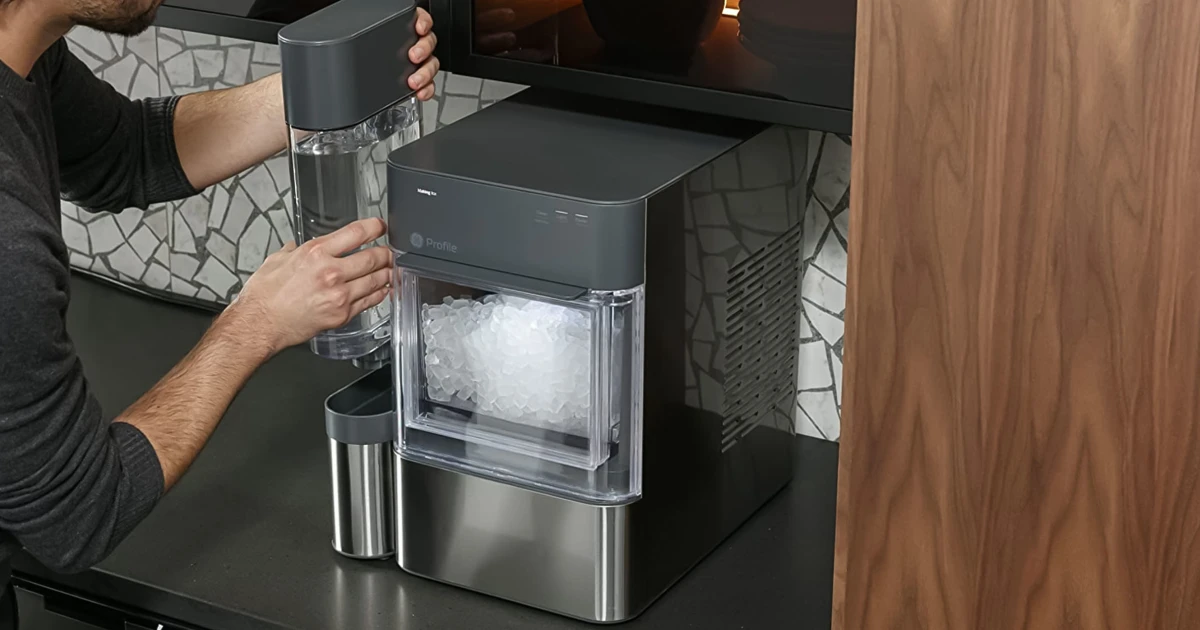
A: The popular GE Profile Opal Nugget Ice Maker typically has a power draw of around 225 watts while actively making ice. Its actual energy use will depend on the factors we’ve discussed, like ambient temperature.
Q: Should I leave my portable ice maker on all the time?
A: It depends on your usage. If you use ice consistently throughout the day, it’s fine to leave it on. The machine is designed to maintain the ice level automatically. If you only use ice in the evenings or on weekends, you can save energy by turning it on an hour or so before you need it.
Q: How can I check the exact ice maker electricity usage per hour for my model?
A: The most accurate way is to use a simple plug-in electricity usage monitor, often called a Kill A Watt meter. You plug the meter into the wall and your ice maker into the meter. It will give you a precise reading of the power being consumed in real-time and over a period.
The Final Verdict
The fear that your ice maker will be a major drain on your power bill is largely unfounded. While the specific ice maker electricity usage per hour depends on the model, its environment, and how you use it, a typical countertop unit is a surprisingly affordable convenience. By understanding the factors at play and following a few simple best practices, you can enjoy an endless supply of fresh, clean ice without worrying about a shocking bill at the end of the month. Now you can make an informed decision, confident that you know exactly what it costs to keep your drinks perfectly chilled.