Let’s be honest, running out of ice during a dinner rush is a nightmare scenario for any restaurant owner. It’s the kind of small detail that can bring a bustling service to a grinding halt. If you’re looking to buy an ice maker for restaurants, you’re not just buying an appliance; you’re investing in operational consistency and customer satisfaction. The right machine is a silent, reliable partner, while the wrong one is a constant headache. I’ve seen it all in my years of working with these machines, and my goal here is to guide you through the chilly, often confusing world of commercial ice makers so you can make a choice you won’t regret.
Finding the right machine can feel overwhelming, but it doesn’t have to be. For those exploring different material options and their benefits, understanding why you should buy stainless steel ice maker models is a great place to start, as they offer superior durability and hygiene, which are critical in a commercial setting.
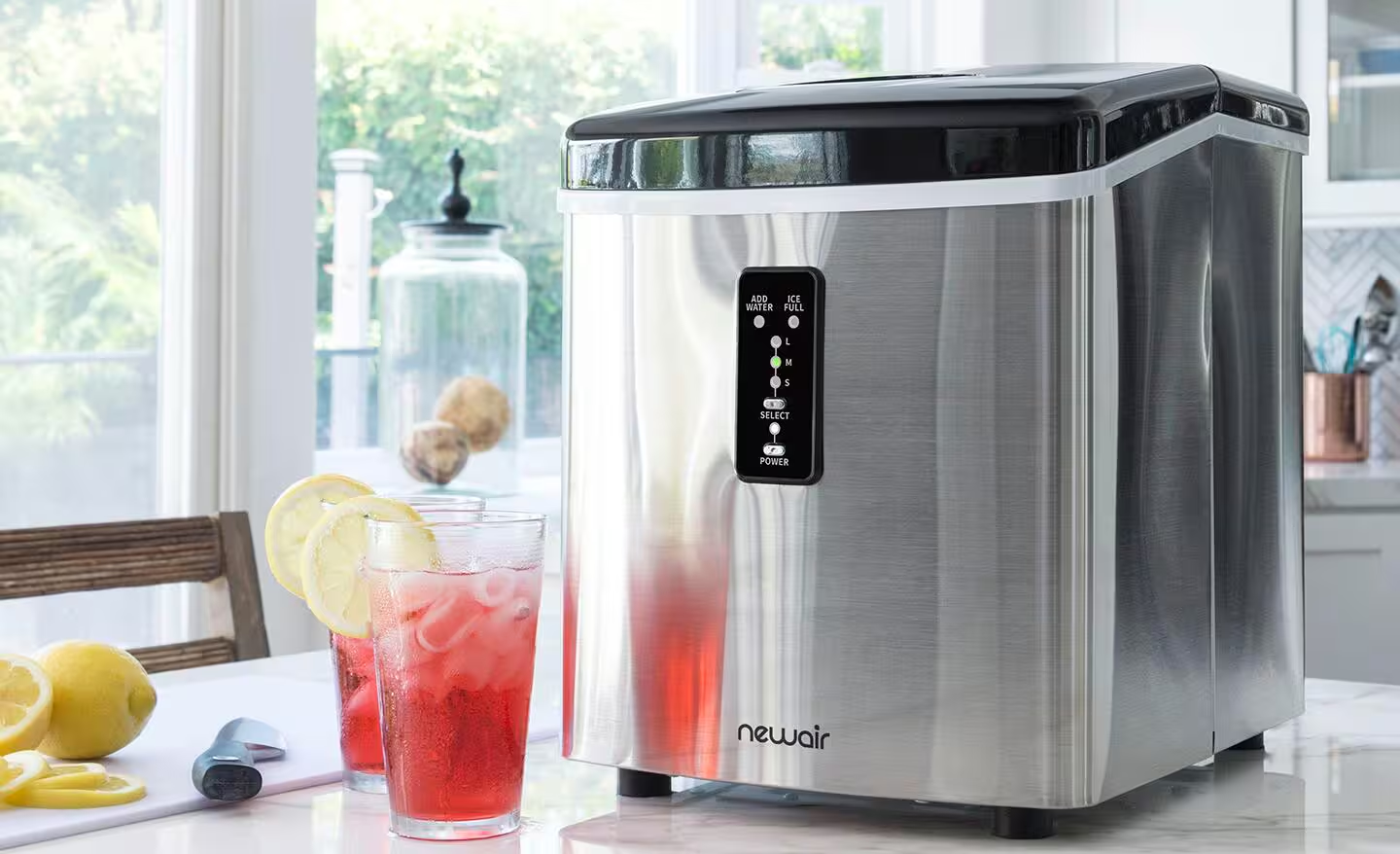
Why Your Restaurant Needs a Dedicated Commercial Ice Maker
You might be thinking, “Can’t I just get by with a few smaller units or even bags of ice?” In a word: no. A commercial environment has demands that go far beyond what a residential unit can handle. The decision to buy an ice maker for restaurants is about more than just convenience; it’s a core business decision.
- Consistency and Quality: A commercial machine produces a consistent shape and quality of ice, which is crucial for drink presentation and taste. No more cloudy, fast-melting ice that waters down your signature cocktails.
- Cost-Effectiveness: Over time, producing your own ice is significantly cheaper than constantly buying bags of ice. The return on investment becomes clear within the first year for most establishments.
- Operational Efficiency: Your staff can focus on serving customers instead of making last-minute runs to the store for ice. It streamlines your entire beverage service operation.
- Sanitation and Safety: Commercial ice makers are designed to meet health codes, with features that make them easier to clean and maintain, reducing the risk of contamination.
What Are the Main Types of Commercial Ice Makers?
When you start to look, you’ll find a few main categories. Picking the right type depends entirely on your space, layout, and volume needs.
Undercounter Ice Makers
Think of these as the compact workhorses. They are self-contained units that look a lot like a mini-fridge or dishwasher and fit neatly under a standard 40-inch bar or counter. They produce and store ice in the same cabinet.
- Best for: Coffee shops, small bars, office break rooms, or as a secondary unit in a larger restaurant.
- Production: Typically produce between 50 to 300 pounds of ice per 24 hours.
Modular Ice Machines
These are the heavy hitters. A modular unit consists of two separate pieces: the ice-making “head” on top and the storage “bin” below. This gives you incredible flexibility. If your ice needs grow, you can simply buy a bigger bin without replacing the entire machine.
- Best for: High-volume restaurants, bars, hotels, and any business where ice is in constant demand.
- Production: Can range from 250 pounds to well over 1,000 pounds of ice per 24 hours.
Ice and Water Dispensers
Commonly seen in hotels and cafeterias, these units not only make ice but also dispense it directly into a cup, often with a water-dispensing option. They are designed for self-service environments and prioritize sanitation by minimizing hand contact with the ice.
- Best for: Quick-service restaurants, employee break areas, and healthcare facilities.
Key Factors When You Buy an Ice Maker for Restaurants
Okay, let’s get down to the nitty-gritty. Answering these questions will narrow down your options from hundreds to just a handful of perfect choices.
How Much Ice Do You Actually Need?
This is the most critical question. Buying a machine that’s too small is a disaster, but an oversized one wastes energy and money. A good rule of thumb is to calculate your peak usage.
Expert Tip: “I always tell my clients to overestimate their needs by about 20%,” says James Peterson, a commercial kitchen consultant with over two decades of experience. “You want a machine that can keep up on your busiest Saturday night, not just a quiet Tuesday afternoon. Planning for growth is key.”
Here’s a basic formula to get you started:
- Restaurants: 1.5 lbs of ice per meal sold.
- Bars/Cocktail Lounges: 3 lbs of ice per seat.
- Water Glasses: 5 oz of ice per 16 oz glass.
Add it all up to get your 24-hour requirement, then add that 20% buffer.
What Kind of Condenser Do You Need?
The condenser is the part of the ice maker that cools the refrigerant, and it’s a major factor in performance and installation.
- Air-Cooled: These are the most common and generally most affordable. They use a fan to blow air over the condenser coils. Crucial: They need adequate clearance (usually 6-12 inches) around them for airflow. Don’t shove them in a tight, unventilated closet!
- Water-Cooled: These use a continuous flow of water to cool the condenser. They are more efficient, quieter, and can operate in hotter environments. However, they use a lot of water and can significantly increase your utility bills unless you have a closed-loop water-cooling system.
- Remote-Cooled: The condenser unit is installed separately, often on the roof, with refrigerant lines running to the ice machine. This is the quietest option and removes heat from the kitchen, but it’s also the most expensive and complex to install.
Understanding Ice Shapes: It’s Not Just Frozen Water
The type of ice you choose impacts everything from drink displacement and melt rate to customer perception.
Full Cube & Half Cube
This is your classic, all-purpose ice. Full cubes melt slowly, making them ideal for spirits on the rocks and general beverage service. Half cubes pack more tightly into a glass, making them great for blended drinks and soft drinks.
Nugget Ice (aka “Sonic Ice” or Chewable Ice)
This is the cult favorite. Made from compressed flakes of ice, it’s soft, chewable, and absorbs the flavor of the drink. It’s fantastic for sodas, iced teas, and healthcare applications.
Flake Ice
Flake ice is soft, moldable, and cools rapidly. You’ll see it used in seafood and produce displays, salad bars, and for blended cocktails where a smooth consistency is desired.
Don’t Forget Installation and Maintenance
Once you buy an ice maker for restaurants, the journey isn’t over. Proper installation is key to its longevity and performance. You’ll need a water line, a power source, and a drain. Most commercial machines rely on a gravity drain, meaning the drain must be lower than the machine itself. If that’s not possible, you’ll need a model with a built-in drain pump.
Regular maintenance is non-negotiable.
- Daily: Wipe down exterior surfaces and check that the scoop is clean and properly stored.
- Weekly: Check the air filter on air-cooled units and clean it if necessary. A clogged filter chokes the machine and can lead to breakdown.
- Bi-Annually (at a minimum): The machine needs a deep cleaning and descaling by a qualified technician. This removes mineral buildup (scale) and sanitizes the internal components. When scheduling this service, you might also look for an ice maker sale near me to find deals on cleaning supplies or even a new unit if yours is aging.
Frequently Asked Questions
What does NSF certified mean for an ice maker?
NSF (National Sanitation Foundation) certification means the ice maker has been tested and approved to meet strict standards for public health and safety. It ensures the materials are non-toxic and the machine is designed to be easily cleaned, which is a requirement for most health departments.
Air-cooled or water-cooled: which is better for my kitchen?
For most restaurants, an air-cooled unit is the most practical and cost-effective choice, provided you have adequate ventilation. If your kitchen is extremely hot (consistently above 85°F) or poorly ventilated, a water-cooled or remote-cooled unit will perform much more reliably.
Can I install a commercial ice maker myself?
While it’s technically possible if you have plumbing and electrical experience, it’s highly recommended to have a professional install it. An improper installation can void your warranty, lead to leaks, and cause premature failure of the machine.
How often should a commercial ice maker be professionally cleaned?
The standard recommendation is every six months. However, in areas with very hard water or environments with a lot of yeast or dust (like a bakery or pizzeria), you may need to clean it every three months.
Your Final Decision
Choosing to buy an ice maker for restaurants is a significant step. Think of it as hiring a new, incredibly reliable employee who works 24/7. By carefully calculating your ice needs, choosing the right type of machine and ice, and planning for proper installation and maintenance, you’re setting your business up for success. You’re ensuring that every drink you serve is perfectly chilled, every customer is happy, and your kitchen runs as smoothly as possible. Now, go forth and find the perfect machine to keep your business cool.